
Skin resilience starts at the surface
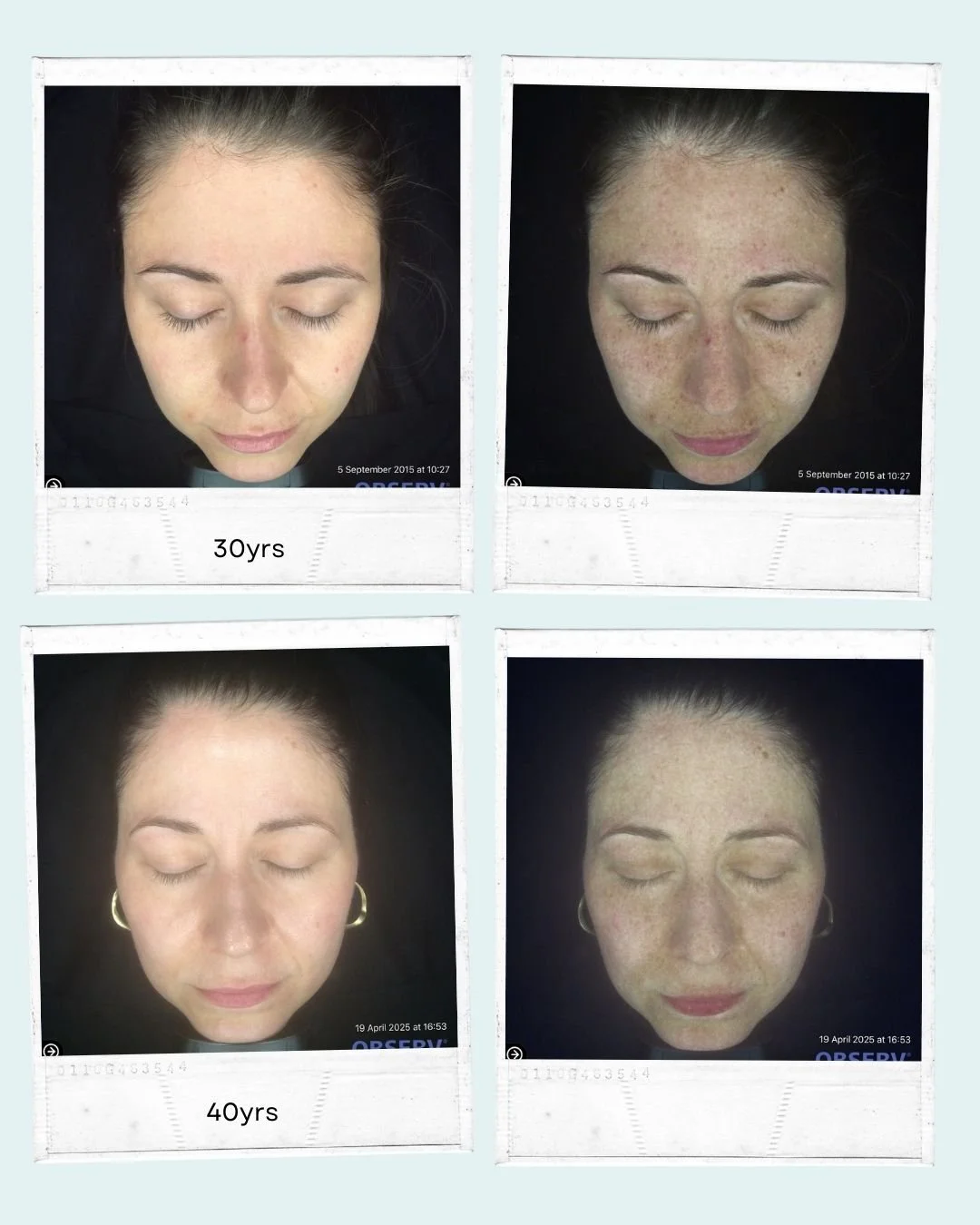
At the recent symposium for the International Association for Corneotherapy held in Germany this year, findings were presented which showed that using the corneotherapeutic approach to skincare did so much more than just treat inflammatory conditions. It has a much more far reaching effect on skin health and appearance, and plays a key role in preventing the signs of premature aging.
In the past few decades there has been a lot of focus on active ingredients and their effect on underlying cells and systems, but without the benefits of corneotherapy there is only a portion of the work getting done. When adding in this part of the puzzle you prevent the cascade of barrier disruption, immune stress and chronic inflammation, which are some of the triggers that accelerate the aging process. An ounce of prevention is worth a pound of cure, as these pictures illustrate. The pictures above are of one of my first clients in Edinburgh, aged 30 and 40. As you can see, the quality of her skin is actually better in the pictures taken 10 years later! It appears more luminous and the underlying pigmentation is much more even.
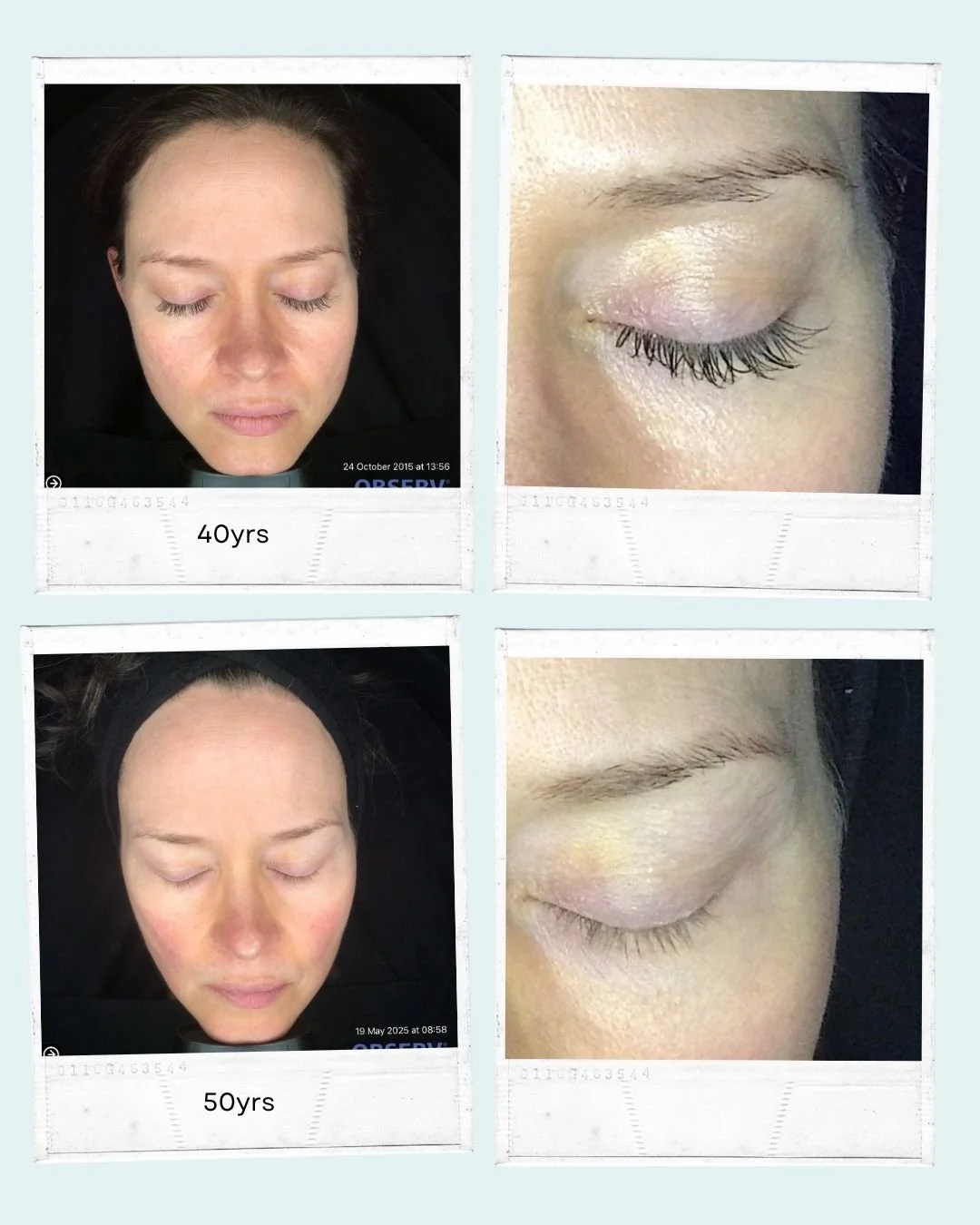
These pictures are of myself, also taken 10 years apart. I took the top one when I first got my Observ, and the second one a few months ago when I wanted to check something on my skin and idly thought I’d compare my earliest pictures to now. It’s very clear that I’m older, as my face shape is changing (I also don’t have time to get my lash extensions done anymore!), but I was actually quite surprised to see that there wasn’t much change to the texture and quality of my skin. New research has been looking in to the effect that the skin barrier has on the aging process and interestingly it has some impact on the whole body.
In tests which have induced epidermal barrier disruption, pro-inflammatory cytokines have been found in both the skin and in circulating blood, and when the epidermal barrier is then strengthened it results in a significant reduction of these cytokines in both the skin and blood. This seems to indicate that having an intact skin barrier has a positive effect on the whole body, not just on the appearance of the skin! This has been such an interesting find for me, as I much prefer to focus on how skin reflects our overall health and well being over simply it’s appearance. Proof positive that looking after your skin is really good for your health!
So how does an impaired skin barrier accelerate the aging process?
gaps in the barrier allow potential irritants through into the underlying layers, triggering the immune response (inflammation).
chronic inflammation can damage the chemical structure of collagen, making it weaker and less able to perform its structural function. Inflammation activates signal pathways that produce pro-inflammatory cytokines and collagen degrading enzymes, the latter of which breaks down collagen and the extra cellular matrix.
the inflammatory environment disrupts the normal balance of creation vs degradation of collagen, resulting in a deficit of fresh collagen.
the breakdown of the collagen matrix releases signals that perpetuate the inflammatory response, creating a feedback loop.
An impaired skin barrier and low level inflammation affect the skin’s health and function, and consequently it’s appearance, in several ways.
Dehydration: the skin doesn’t retain water as well, which results in an increase in fine dehydration lines and subsequently contributes to more established wrinkles and laxity in skin texture.
Laxity: as mentioned above, it leads to degradation of collagen and elastin, contributing to a reduction in firmness. Inflammation also causes damage to the fibroblasts (the cells which produce collagen).
Oxidative stress: inflammation also leads to an increase in oxidative stress as there is an increase in reactive oxidant species (ROS).
However, it appears that if you provide your skin with the right environment to thrive, this can play a significant role in keeping your skin healthy and looking it’s best (and apparently your body too!)
https://pmc.ncbi.nlm.nih.gov/articles/PMC6381164/
https://pmc.ncbi.nlm.nih.gov/articles/PMC10669244/#sec5-biology-12-01396
https://pmc.ncbi.nlm.nih.gov/articles/PMC1602424/